
OUR PROCESS
A PROCESS RHYTHM BUILT TO KEEP PROJECTS MOVING.
DRS uses a consistent four-part rhythm to organize research, decisions, design, coordination, documentation, and quality assurance.
The rhythm remains consistent across engagements, while the activities and deliverables are adjusted to the project and authorized scope.
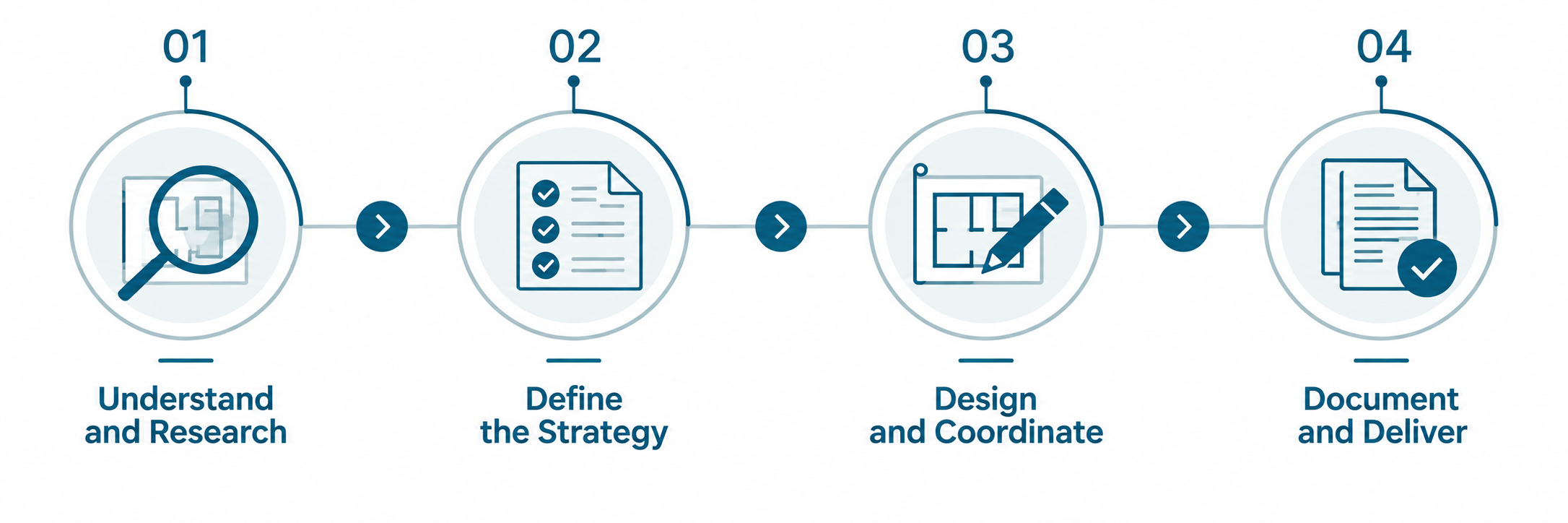


THE DRS METHOD
DEFINED BY RESEARCH. SHAPED BY DESIGN.
Research establishes the conditions, constraints, responsibilities, and decisions that define the project. Design shapes that information into a coordinated response. Documentation and quality assurance carry the approved direction toward permitting and construction.
A PRACTICAL PACKAGE FOR THE NEXT DECISION.
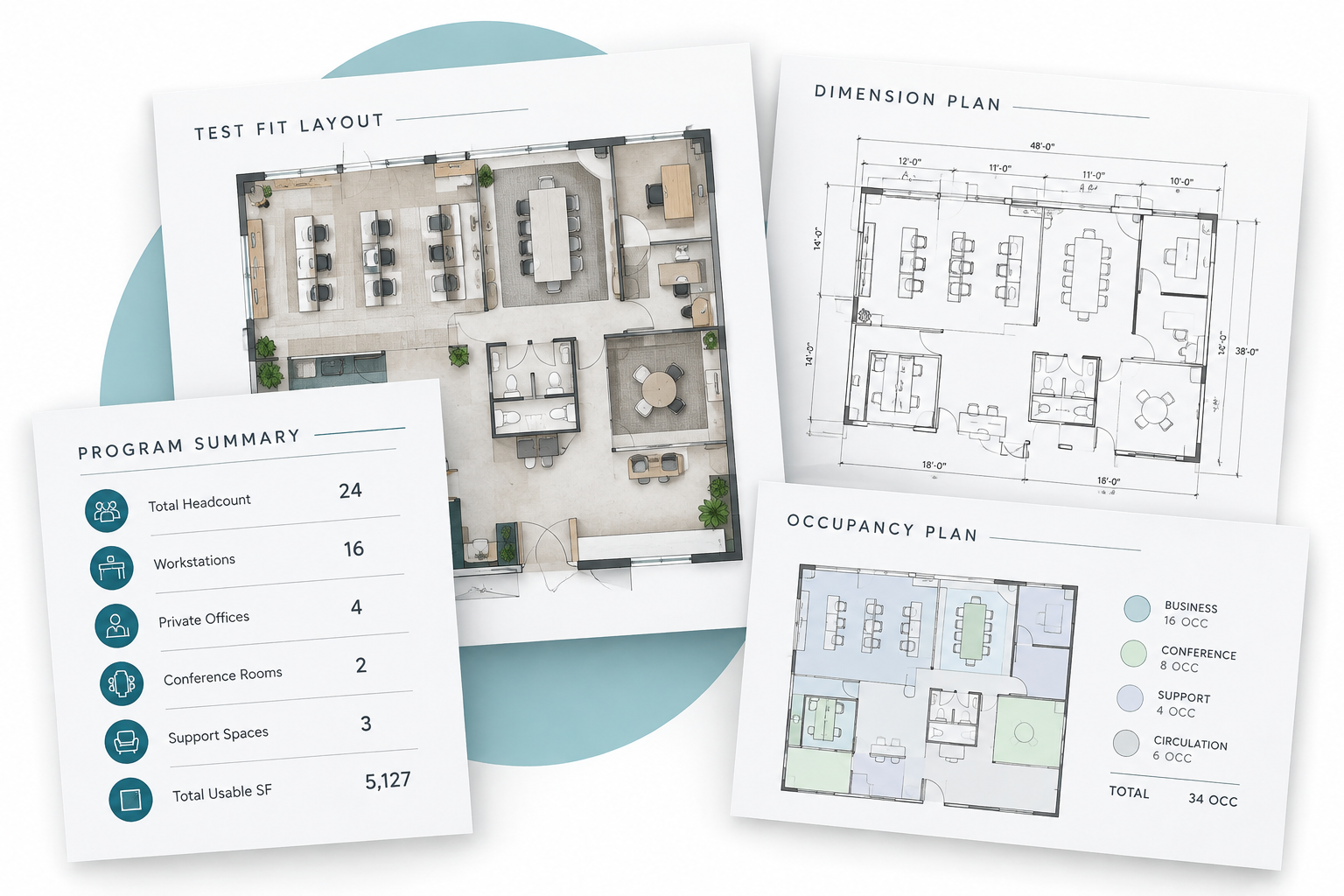
Based on the authorized scope and available base information, a typical Test Fit package includes the following preliminary information.
☑ A Test Fit layout.
☑ A dimensioned plan.
☑ A demolition plan when existing construction is affected and the plan is applicable.
☑ An occupancy plan.
☑ A capacity or program summary.
☑ Key planning observations and identified constraints.
The base service generally develops one preferred layout. Additional options or revisions are prepared when specifically requested and authorized, or when an evident alternative merits evaluation.
FOUR STAGES ONE COORDINATED PATH.
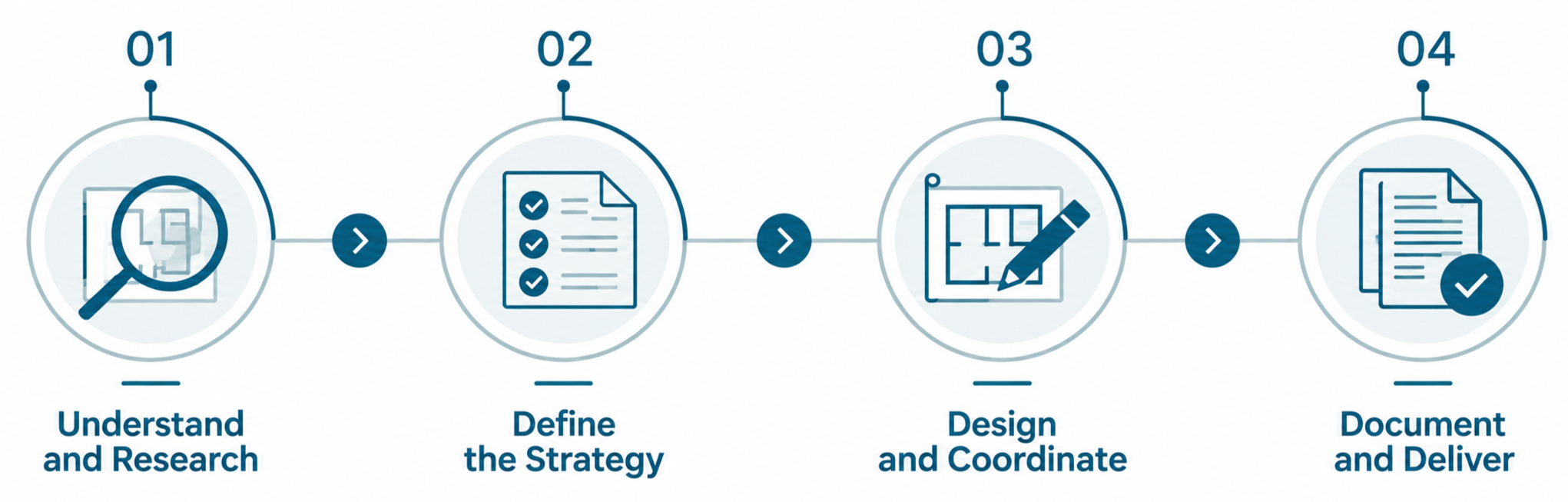
DRS gathers the project goals, program, available plans, site or space conditions, lease and landlord requirements, budget, schedule, jurisdictional requirements, and known risks. The client confirms the goals, program, priorities, and available information before the project advances.
DRS establishes the scope, deliverables, consultant responsibilities, decision path, milestone schedule, and project-specific guidelines. The client confirms the strategy, responsibilities, and decisions required for the next stage.
DRS develops the design and coordinates client, landlord, consultant, and technical information. Principal review and the applicable internal checks occur before each client milestone. The client provides one consolidated response through the designated decision-maker.
DRS prepares the authorized documents, completes final internal and principal review, records the issue, and provides permitting or construction support when included. The client approves required milestones and communicates later changes promptly.

QUALITY ASSURANCE
CLIENT DECISION AND COMMUNICATION PROTOCOL.
DRS identifies required decisions and target dates as part of the project schedule. Clients should designate one decision-maker, coordinate internal stakeholders, and return one consolidated comment list at each milestone.
Information, approvals, or scope changes received after an agreed milestone may affect the schedule, consultant work, fee, or issued documents.
CLIENT COLLABORATION
REVIEW BEFORE EVERY CLIENT MILESTONE.
A principal reviews the work at each process stage before the product is sent to the client for review and approval. The review method is scaled to the engagement and may include the following controls.
☑ Project-specific guidelines.
☑ Internal drawing checklists.
☑ Principal reviews.
☑ Consultant coordination reviews.
☑ Client milestone approvals.
☑ Consolidated comment lists.
☑ Drawing issue records.

LET’S WORK TOGETHER
BRING STRUCTURE TO THE NEXT PROJECT.
Share the project goals, current information, and desired schedule. DRS will identify the appropriate scope, decision path, and next milestone.